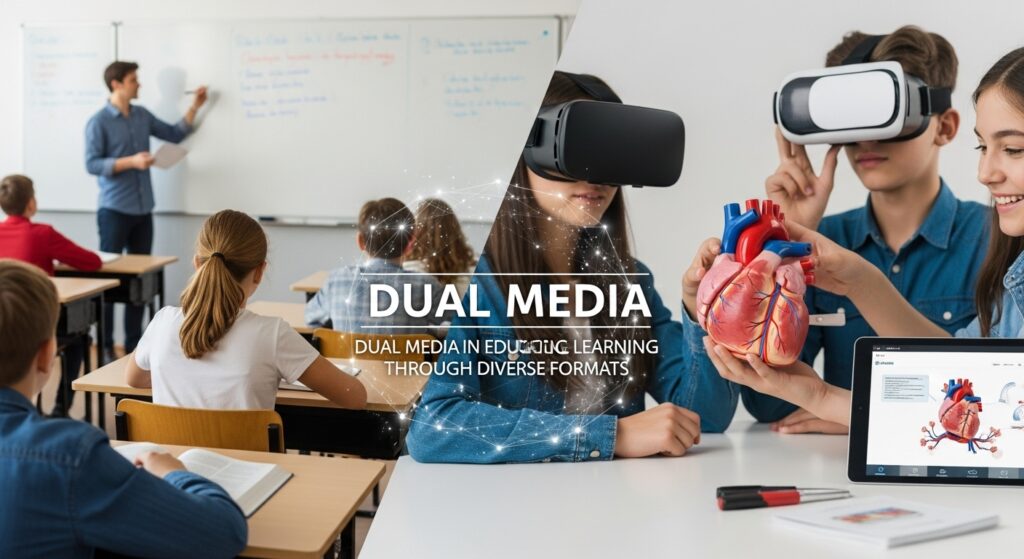
Education is constantly evolving, driven by the need to meet diverse learning styles and preferences. One innovative approach that has gained momentum is dual media in education. This concept merges different formats—like text and video or interactive activities—to create a richer learning environment. Imagine a classroom where students engage with content through various mediums, enhancing their understanding and retention of information. In this blog post, we’ll explore what dual media means for educators and learners alike, unpack its benefits, share real-world examples, tackle potential challenges, and look ahead to its future impact on educational practices. Let’s dive into the world of dual media!
Understanding the Concept of Dual Media
Dual media in education refers to the integration of different formats for delivering content. This may include a combination of traditional print materials, digital resources, videos, and interactive platforms.
The idea is to leverage various modes of communication to enrich learning experiences. By doing so, educators can cater to diverse learning styles and preferences.
For instance, some students grasp concepts better through visual aids, while others thrive on auditory input. Dual media addresses this variability effectively.
Additionally, it facilitates deeper engagement with the subject matter. Students are not limited to one way of absorbing information; they can explore topics from multiple angles.
This approach encourages critical thinking and creativity as learners navigate through different types of materials and formats. As technology evolves, the possibilities for dual media continue to expand within educational settings.
Benefits of Dual Media Learning
Dual media learning offers a wealth of advantages for students. By integrating different formats, such as text and video, educators can cater to various learning styles. This approach helps visual learners grasp concepts through engaging visuals while auditory learners benefit from lectures or discussions.
Another major benefit is increased retention of information. When students encounter the same material in multiple formats, they are more likely to remember it long-term. The brain thrives on variety, and dual media keeps things fresh and stimulating.
Moreover, this method encourages critical thinking. Students analyze content from diverse perspectives, fostering deeper understanding. They become active participants in their education rather than passive recipients.
Additionally, dual media promotes accessibility. Learners with disabilities find resources tailored to their needs more readily available when multiple formats are used. These benefits make dual media an essential component of modern educational strategies.
Examples of Dual Media in Education
Dual media in education takes many forms, making learning more dynamic and engaging. One prominent example is the combination of video lessons with interactive quizzes. Students can watch a tutorial on algebra concepts and immediately test their understanding through embedded questions.
Another effective instance involves using digital storytelling alongside traditional reading materials. This method allows students to explore narratives through multimedia presentations, enhancing comprehension and creativity.
In classrooms, blended learning platforms often incorporate dual media by merging online resources with face-to-face instruction. For instance, educators might use podcasts to supplement lectures, providing diverse perspectives on complex topics.
Art classes also benefit from dual approaches. Students may create physical artworks while exploring virtual galleries for inspiration. Combining these formats encourages both practical skills and critical thinking in art interpretation.
Each example showcases how versatile dual can be in catering to various learning styles and preferences among students.
Challenges and Solutions for Implementing Dual Media in Education
Implementing dual media in education comes with its set of challenges. One significant hurdle is the lack of adequate training for educators. Many teachers feel unprepared to integrate various formats into their teaching methods.
Another challenge is resource availability. Not all schools have access to the necessary technology or materials that support dual learning. This can create disparities among students.
To tackle these issues, professional development programs should focus on practical strategies for using diverse formats effectively. Workshops and online courses can empower teachers with new skills.
Additionally, schools must invest in infrastructure that supports digital and print resources equally. Partnerships with tech companies could provide essential tools without straining budgets.
Fostering a culture that embraces experimentation will encourage educators to try innovative approaches, overcoming resistance and enhancing student engagement through dual techniques.
Incorporating Dual Media into the Curriculum
Integrating dual into the curriculum requires thoughtful planning and creativity. Educators can start by blending traditional teaching methods with modern technologies, such as videos and interactive apps.
Consider using multimedia presentations alongside textbooks. This approach caters to different learning styles, helping visual and auditory learners grasp concepts more effectively.
Classroom discussions can be enhanced through online forums or social media platforms. These tools encourage students to engage with course material outside of school, allowing for deeper exploration of topics.
Project-based learning is another effective way to incorporate dual. Students can create digital portfolios that showcase their understanding through various formats—videos, podcasts, or infographics.
Regular training sessions for teachers are vital too. By equipping educators with the skills they need to utilize these diverse formats effectively, schools can create a dynamic learning environment that fosters collaboration and creativity among students.
The Future of Dual Media in Education
The future of dual media in education is promising. As technology evolves, so do the methods we use to engage students. Virtual reality and augmented reality are becoming integral tools for immersive learning experiences.
These advancements allow learners to explore concepts beyond traditional textbooks. Imagine studying ancient civilizations by virtually walking through historical sites or analyzing complex science theories through interactive simulations.
Additionally, artificial intelligence plays a significant role in customizing educational content. It can adapt materials based on individual learning styles, ensuring every student receives tailored support.
Collaboration between educators and tech developers will be crucial. Schools must embrace innovation while maintaining pedagogical integrity.
As diverse formats continue to blend seamlessly, the landscape of education will transform dramatically. This shift could lead to more inclusive environments where all students thrive together, regardless of their preferred learning style or pace.
Conclusion
The integration of dual media into education offers a transformative approach to learning. By combining various formats—such as text, audio, and video—educators can cater to diverse learning styles and preferences. This not only enhances engagement but also fosters better retention of information.
As we look ahead, the role of technology will likely expand further, making dual media even more accessible in classrooms around the world. With the right strategies and resources in place, educators can harness this powerful tool to create enriched learning environments that benefit all students.
The journey toward implementing dual media is filled with opportunities for growth and innovation. Embracing these changes paves the way for a dynamic educational landscape where every learner has the chance to thrive.